
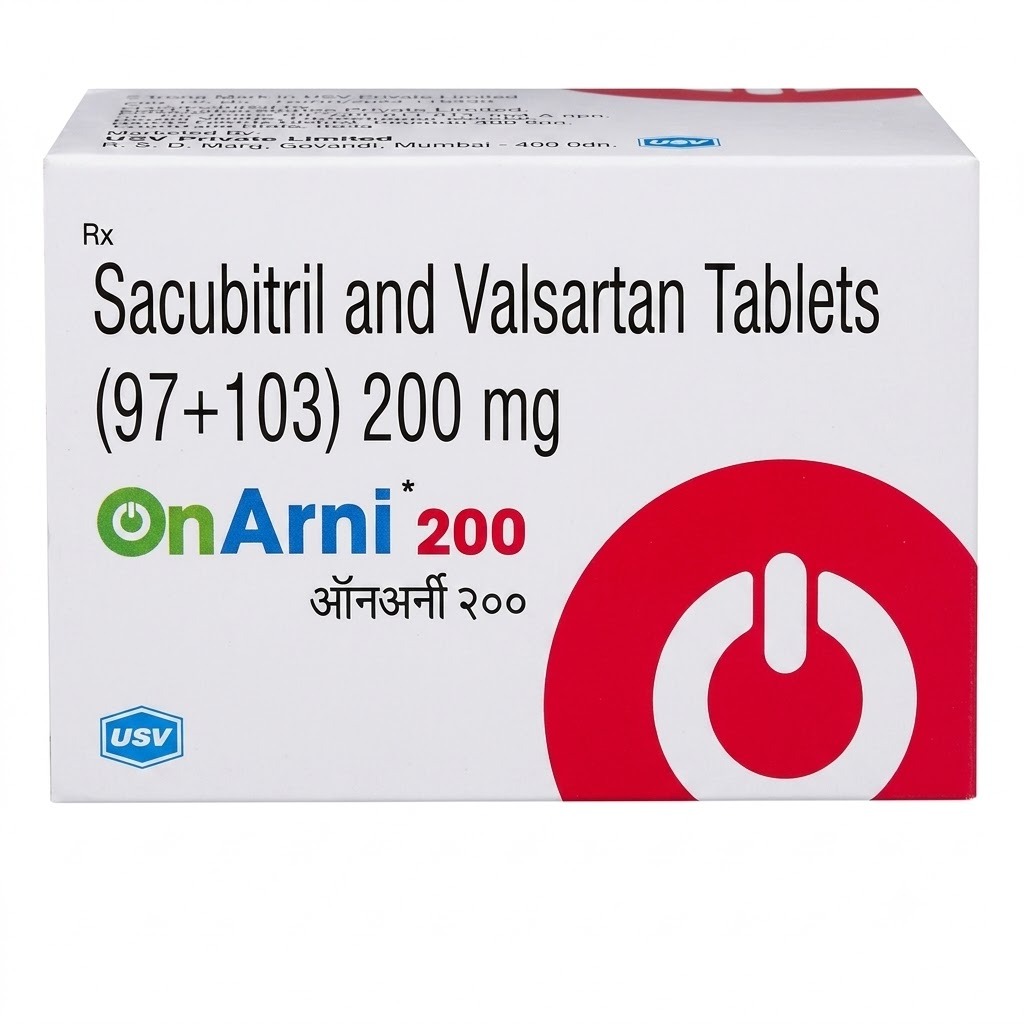
Learn about Sacubitril and Valsartan Tablets 97 mg + 103 mg (200 mg), including uses, benefits, how they work, dosage guidance, safety precautions, side effects, and FAQs.
Sacubitril and Valsartan Tablets 97 mg + 103 mg (200 mg)
Sacubitril and Valsartan Tablets 97 mg + 103 mg (200 mg) are prescription cardiovascular medicines used primarily in the management of heart failure with reduced ejection fraction (HFrEF) and other approved heart-failure populations, depending on local treatment guidelines.
This medicine combines two active ingredients with complementary mechanisms:
- Sacubitril 97 mg — a neprilysin inhibitor
- Valsartan 103 mg — an angiotensin II receptor blocker (ARB)
Together, they are known as an angiotensin receptor-neprilysin inhibitor (ARNI). The combination helps reduce harmful neurohormonal effects, decrease strain on the heart, and support cardiovascular function.
At Sky High Medex, we supply branded and generic pharmaceutical products through professional international supply channels, subject to applicable prescription, import, export, and destination-country regulations.
What Are Sacubitril and Valsartan Tablets 97 + 103 mg?
The 97 mg + 103 mg strength contains a total of 200 mg of the two active ingredients:
| Active Ingredient | Amount |
|---|---|
| Sacubitril | 97 mg |
| Valsartan | 103 mg |
| Total | 200 mg |
The two medicines work together to influence different pathways involved in heart failure.
Sacubitril increases the activity of beneficial natriuretic peptides by inhibiting neprilysin, while valsartan blocks the effects of angiotensin II at the AT1 receptor.
Uses of Sacubitril and Valsartan 200 mg
Healthcare professionals may prescribe Sacubitril/Valsartan for:
1. Heart Failure With Reduced Ejection Fraction
It is an established treatment option for eligible patients with heart failure with reduced ejection fraction, where it can reduce the risk of cardiovascular death and hospitalization for heart failure.
2. Chronic Heart Failure Management
Sacubitril/Valsartan may be incorporated into a broader heart-failure treatment plan that can include other medicines and lifestyle measures.
3. Pediatric Heart Failure in Certain Patients
Some formulations are approved for specific pediatric patients with symptomatic heart failure and systemic left ventricular systolic dysfunction. Pediatric dosing is individualized according to age, weight, and formulation.
The exact approved indications vary by country and product.
How Does Sacubitril and Valsartan Work?
The medicine combines two different mechanisms.
Sacubitril
Sacubitril is converted into an active metabolite that inhibits neprilysin.
Neprilysin breaks down several beneficial peptides involved in cardiovascular regulation. Inhibiting neprilysin increases their activity, which can promote:
- Natriuresis
- Diuresis
- Blood-vessel relaxation
- Reduced cardiac workload
Valsartan
Valsartan is an angiotensin II receptor blocker (ARB). It prevents angiotensin II from activating AT1 receptors.
This can reduce:
- Vasoconstriction
- Sodium and water retention
- Blood-pressure elevation
- Harmful cardiac remodeling
The combined action makes Sacubitril/Valsartan an important therapy for appropriate heart-failure patients.
Benefits of Sacubitril and Valsartan Tablets
Supports Heart Failure Management
Sacubitril/Valsartan can improve outcomes in appropriately selected patients with heart failure with reduced ejection fraction.
Reduces Hospitalization Risk
Clinical evidence supports its role in reducing the risk of hospitalization for heart failure in suitable patients.
Reduces Cardiovascular Mortality
In appropriate patients, treatment can reduce the risk of cardiovascular death.
Helps Reduce Cardiac Strain
The complementary actions of sacubitril and valsartan can reduce several neurohormonal mechanisms that contribute to progressive heart failure.
Supports Long-Term Cardiovascular Care
When used as part of guideline-directed therapy, Sacubitril/Valsartan can contribute to comprehensive long-term heart-failure management.
Dosage and Administration
The appropriate dose depends on the patient's condition, previous medicines, blood pressure, kidney function, potassium levels, and other factors.
The 97 mg sacubitril + 103 mg valsartan strength is commonly used as a twice-daily target dose in appropriate adult patients after appropriate dose titration.
However, not every patient should begin with this strength.
Treatment may begin at a lower dose in patients who:
- Have not previously taken an ACE inhibitor or ARB
- Have low blood pressure
- Have kidney impairment
- Have certain other risk factors
Your healthcare professional determines the correct starting and maintenance dose.
Important
Sacubitril/Valsartan should not be taken together with an ACE inhibitor.
A suitable washout period is required when switching from an ACE inhibitor to Sacubitril/Valsartan because concurrent use increases the risk of angioedema.
Possible Side Effects
Potential side effects of Sacubitril/Valsartan include:
- Low blood pressure
- Dizziness
- Increased potassium levels
- Changes in kidney function
- Cough
- Headache
- Fatigue
A serious but uncommon reaction is angioedema, which can cause swelling of the face, lips, tongue, or throat.
Seek emergency medical attention if significant facial or throat swelling or difficulty breathing occurs.
Important Safety Precautions
Before taking Sacubitril/Valsartan, tell your healthcare provider if you have:
- Kidney disease
- Liver disease
- Low blood pressure
- High potassium levels
- Diabetes
- Previous angioedema
- A history of severe allergic reactions
- Dehydration
- Other cardiovascular conditions
Your healthcare provider may monitor:
- Blood pressure
- Kidney function
- Serum potassium
- Other relevant laboratory parameters
Sacubitril/Valsartan and Kidney Function
Sacubitril/Valsartan can affect kidney function in susceptible patients.
The risk may be higher in people who are dehydrated, have pre-existing kidney disease, or take other medicines that affect renal function.
Regular medical monitoring can help identify changes early.
Sacubitril/Valsartan and Potassium
The medicine can increase blood potassium levels in some patients.
Inform your healthcare provider if you use:
- Potassium supplements
- Potassium-containing salt substitutes
- Potassium-sparing diuretics
- Other medicines that may increase potassium
Do not make changes to potassium supplementation without medical advice.
Who Should Avoid Sacubitril/Valsartan?
Sacubitril/Valsartan may not be appropriate for people with certain conditions.
It should generally be avoided in patients with:
- Previous serious angioedema related to an ACE inhibitor or ARB
- Concurrent ACE inhibitor treatment
- Certain severe liver conditions
- Specific contraindicated drug combinations
Pregnant patients should not use Sacubitril/Valsartan because medicines affecting the renin-angiotensin system can cause fetal harm.
Always discuss pregnancy, pregnancy planning, and breastfeeding with a healthcare professional.
Storage Instructions
For proper storage:
- Keep tablets in their original packaging.
- Store according to the manufacturer's recommended temperature.
- Protect from excessive moisture and heat.
- Keep away from direct sunlight.
- Keep out of reach of children.
- Do not use after the expiration date.
Follow the storage requirements provided with the specific product.
Why Choose Sky High Medex?
Sky High Medex supplies a wide range of branded and generic pharmaceutical products through professional international supply channels.
Our services include:
- Cardiovascular medicines
- Branded and generic pharmaceuticals
- Prescription medicines
- Wholesale pharmaceutical supply
- Bulk sourcing
- International pharmaceutical supply
- Secure packaging
- Professional customer support
Product availability and international shipment are subject to applicable prescription, import, export, and destination-country regulations.
Frequently Asked Questions (FAQs)
What are Sacubitril and Valsartan Tablets 97 mg + 103 mg used for?
They are primarily used for the management of heart failure, particularly heart failure with reduced ejection fraction, in appropriate patients.
What does 97 + 103 mg mean?
The tablet contains 97 mg of sacubitril and 103 mg of valsartan, giving a combined labeled amount of 200 mg.
Is Sacubitril/Valsartan a blood-pressure medicine?
It can lower blood pressure, but its primary role is heart-failure treatment in appropriate patients rather than simply treating uncomplicated hypertension.
How does Sacubitril/Valsartan help the heart?
Sacubitril increases beneficial natriuretic peptide activity, while valsartan blocks angiotensin II. Together, these effects can reduce cardiac strain and harmful cardiovascular remodeling.
Can Sacubitril/Valsartan be taken with an ACE inhibitor?
No. Sacubitril/Valsartan should not be taken simultaneously with an ACE inhibitor. A medically appropriate washout period is required when switching from an ACE inhibitor.
Can Sacubitril/Valsartan lower blood pressure too much?
Yes. Low blood pressure or dizziness can occur, particularly when treatment is started or doses are increased. Your healthcare provider will determine an appropriate dose.
Does Sacubitril/Valsartan affect kidney function?
It can affect kidney function in some patients. Healthcare professionals may monitor kidney function and potassium levels during treatment.
Can Sacubitril/Valsartan increase potassium?
Yes. Hyperkalemia can occur, particularly in patients with kidney impairment or those taking other medicines that raise potassium.
Can Sacubitril/Valsartan be used during pregnancy?
No. Medicines affecting the renin-angiotensin system can cause fetal harm. Patients who become pregnant should contact their healthcare provider promptly.
Does Sky High Medex supply Sacubitril and Valsartan Tablets 97 + 103 mg?
Sky High Medex supplies a range of branded and generic pharmaceutical products internationally, subject to product availability and applicable prescription and import/export requirements.
Conclusion
Sacubitril and Valsartan Tablets 97 mg + 103 mg (200 mg) combine a neprilysin inhibitor with an angiotensin II receptor blocker to provide complementary cardiovascular effects. The medicine is an important component of treatment for eligible patients with heart failure with reduced ejection fraction.
Because Sacubitril/Valsartan can affect blood pressure, kidney function, and potassium levels—and because it has important interactions with ACE inhibitors—it should be taken only under appropriate medical supervision.
Sky High Medex provides branded and generic pharmaceutical products through professional international supply services, with product availability and shipment subject to applicable regulations.