
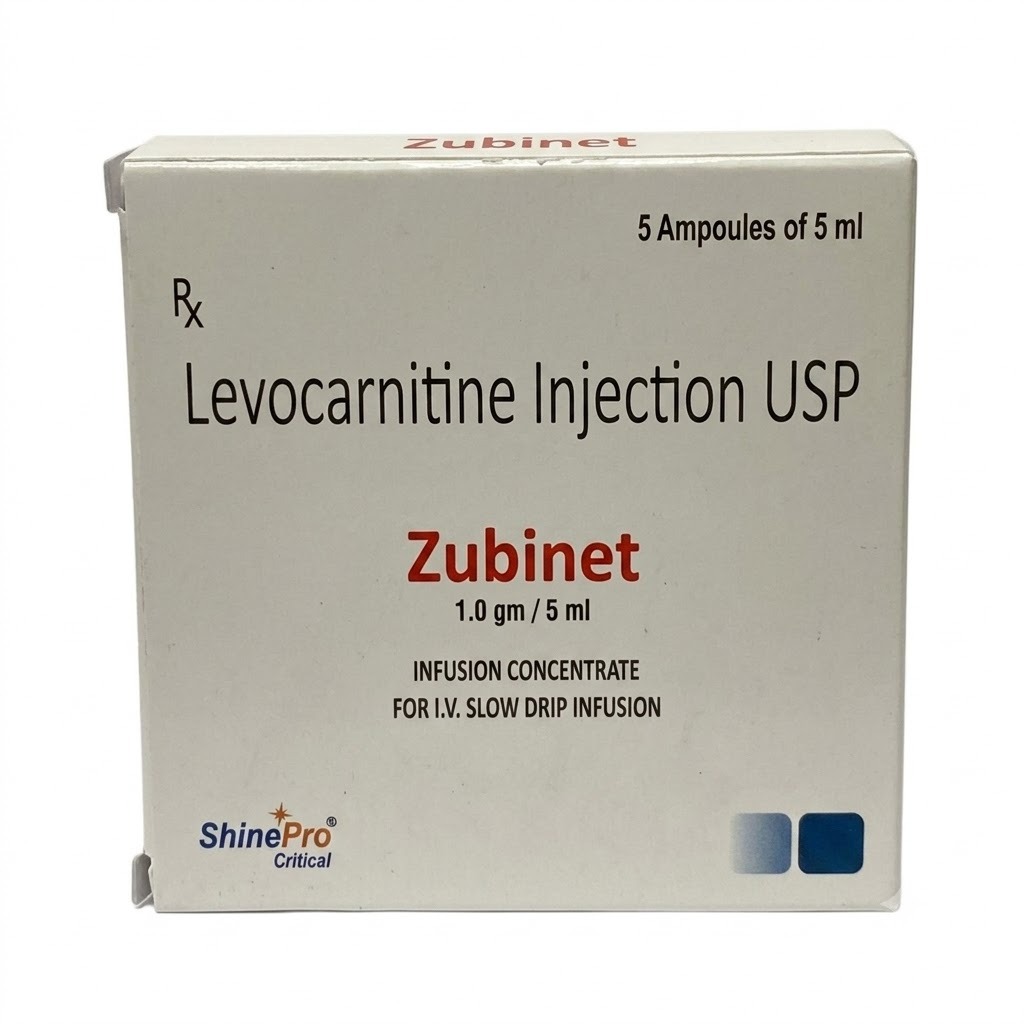
Learn about Levocarnitine Injection 1gm, including its medical uses, benefits, how levocarnitine works, administration, precautions, side effects, and frequently asked questions.
Levocarnitine Injection 1gm
Levocarnitine Injection 1gm contains levocarnitine, the naturally occurring biologically active form of L-carnitine. Carnitine plays an important role in cellular energy production by helping transport long-chain fatty acids into mitochondria, where they can be metabolized for energy.
Levocarnitine injection is used in specific clinical situations, particularly when carnitine deficiency requires parenteral replacement or when oral administration is not appropriate.
Sky High Medex provides pharmaceutical product information and sourcing support subject to applicable prescription, import, export, and destination-country regulations.
Important: Levocarnitine injection is a prescription medicine and should be administered under appropriate medical supervision. This article is for educational purposes and does not replace professional medical advice.
What Is Levocarnitine Injection 1gm?
Levocarnitine, also known as L-carnitine, is a naturally occurring compound involved in energy metabolism.
The body obtains carnitine through dietary sources and also produces it naturally. It helps transport certain fatty acids into mitochondria, which are the energy-producing structures within cells.
Levocarnitine Injection 1gm provides levocarnitine through injection and may be used when rapid or parenteral supplementation is clinically indicated.
The exact concentration and volume of a 1gm injection can vary between products, so the product label and prescribing information should always be checked.
What Is Levocarnitine Injection Used For?
Treatment of Carnitine Deficiency
One of the primary medical uses of levocarnitine is the treatment of carnitine deficiency.
Carnitine deficiency may occur because of:
- Certain inherited metabolic disorders
- Some medical conditions
- Certain treatments that affect carnitine levels
- Increased losses of carnitine in specific clinical circumstances
Symptoms associated with significant carnitine deficiency can vary depending on the underlying condition.
Use in Certain Dialysis Patients
Patients receiving hemodialysis may lose carnitine during treatment.
In appropriate patients, healthcare professionals may use levocarnitine supplementation to address documented or suspected carnitine deficiency associated with dialysis.
The decision to administer injectable levocarnitine should be based on clinical assessment and relevant laboratory findings.
How Does Levocarnitine Work?
Levocarnitine participates in the transport of long-chain fatty acids into mitochondria.
Inside mitochondria, fatty acids undergo beta-oxidation, a process that contributes to cellular energy production.
Carnitine therefore plays an important role in:
- Fatty-acid transport
- Energy metabolism
- Mitochondrial function
- Utilization of certain fatty acids for energy
When carnitine levels are insufficient, fatty-acid metabolism can be impaired. Replacing carnitine may help restore normal metabolic processes in people with clinically significant deficiency.
Potential Benefits of Levocarnitine Injection 1gm
When used for an appropriate medical indication, levocarnitine may provide several potential benefits.
Helps Restore Carnitine Levels
Supplementation can help replenish carnitine in individuals with clinically significant deficiency.
Supports Fatty-Acid Metabolism
Carnitine facilitates the transport of long-chain fatty acids into mitochondria for energy production.
Supports Cellular Energy Production
By participating in fatty-acid oxidation, carnitine contributes to normal cellular energy metabolism.
Useful When Injectable Treatment Is Needed
The injectable form provides an option when parenteral administration is clinically appropriate.
May Be Used in Certain Metabolic Conditions
Levocarnitine may be incorporated into treatment plans for specific inherited metabolic disorders associated with carnitine deficiency.
Levocarnitine Injection and Kidney Disease
Kidney function is an important consideration when using levocarnitine.
Patients with severe kidney impairment or those undergoing dialysis may have altered carnitine metabolism and clearance.
Healthcare professionals may monitor:
- Kidney function
- Carnitine levels where appropriate
- Clinical response
- Potential adverse effects
The dose and administration schedule should be individualized according to the patient's medical condition.
Levocarnitine Injection 1gm Dosage
There is no single dosage appropriate for everyone.
The dose depends on factors such as:
- The reason for treatment
- Severity of carnitine deficiency
- Age
- Body weight
- Kidney function
- Dialysis status
- Laboratory results
- Response to treatment
- Other medicines
A healthcare professional should determine the appropriate dosage and administration schedule.
Do not self-administer injectable levocarnitine or change the prescribed dose without medical guidance.
How Is Levocarnitine Injection Administered?
Levocarnitine injection is administered by a qualified healthcare professional according to the specific product instructions.
Depending on the product and indication, administration may be intravenous or otherwise specified in the approved product information.
The injection should be prepared and administered using appropriate sterile technique.
Possible Side Effects of Levocarnitine Injection
Levocarnitine is generally tolerated by many patients when appropriately administered, but side effects can occur.
Potential adverse effects include:
- Nausea
- Vomiting
- Abdominal discomfort
- Diarrhea
- Headache
- Unpleasant or unusual body odor
- Injection-site reactions
The intensity of side effects can vary between individuals.
Important Safety Considerations
Before receiving Levocarnitine Injection 1gm, inform your healthcare professional about:
- Kidney disease
- Seizure disorders
- Pregnancy
- Breastfeeding
- Allergies
- Current prescription medicines
- OTC medicines
- Vitamins and supplements
Patients with a history of seizures should discuss this with their healthcare provider because seizure-related events have been reported in association with levocarnitine treatment.
Levocarnitine Drug Interactions
Levocarnitine may interact with certain medicines.
One important example is warfarin, an anticoagulant. Levocarnitine may affect warfarin therapy in some patients, potentially requiring closer monitoring of anticoagulation.
Always provide your healthcare professional with a complete list of medicines and supplements you use.
Levocarnitine Injection During Pregnancy
If you are pregnant or planning to become pregnant, discuss levocarnitine treatment with your healthcare professional.
The decision to use injectable levocarnitine should be based on the underlying medical condition and an assessment of potential benefits and risks.
Levocarnitine Injection and Breastfeeding
Levocarnitine is naturally present in the body and is also found in breast milk.
If you are breastfeeding and require levocarnitine treatment, discuss the appropriate treatment plan with your healthcare professional.
Frequently Asked Questions (FAQs)
What is Levocarnitine Injection 1gm?
It is an injectable medicine containing 1 gram of levocarnitine, used in appropriate clinical situations to treat or prevent clinically significant carnitine deficiency.
What is Levocarnitine Injection used for?
It is primarily used for carnitine deficiency associated with certain inherited metabolic conditions and other clinical situations where replacement is medically indicated.
What is levocarnitine?
Levocarnitine is the biologically active form of L-carnitine, a compound involved in fatty-acid transport and cellular energy metabolism.
How does levocarnitine work?
It helps transport long-chain fatty acids into mitochondria, where they can undergo oxidation and contribute to energy production.
Is Levocarnitine Injection used in dialysis patients?
It may be used in selected dialysis patients who have clinically significant carnitine deficiency or related indications, according to medical assessment.
Is Levocarnitine Injection 1gm a vitamin?
No. Levocarnitine is a naturally occurring compound involved in energy metabolism rather than a conventional vitamin.
Can Levocarnitine Injection be self-administered?
Injectable levocarnitine should be administered according to professional medical instructions and the approved product information. It is not intended for unsupervised self-treatment.
What are the common side effects?
Possible side effects include nausea, vomiting, abdominal discomfort, diarrhea, headache, unusual body odor, and injection-site reactions.
Can levocarnitine affect seizure disorders?
Seizure-related events have been reported. Patients with a history of seizures should discuss this with their healthcare professional before treatment.
Can Levocarnitine Injection interact with other medicines?
Yes. For example, levocarnitine may affect warfarin therapy in some patients. Always provide your healthcare professional with a complete medication list.
Can Levocarnitine Injection be used during pregnancy?
It may be used when clinically indicated, but pregnancy should always be discussed with a healthcare professional before treatment.
Is Levocarnitine Injection available by prescription?
Injectable levocarnitine is a prescription medicine in many markets. Regulatory requirements and availability differ between countries.
Does Sky High Medex supply Levocarnitine Injection 1gm?
Sky High Medex provides pharmaceutical product information and sourcing support subject to applicable prescription, import, export, and destination-country requirements.
Why Choose Sky High Medex?
Sky High Medex supports pharmaceutical sourcing and supply while recognizing the regulatory requirements applicable to prescription medicines.
Our services may include:
- Pharmaceutical product sourcing
- Wholesale procurement
- Bulk supply
- International export support
- Product documentation assistance
- Packaging support
- Customer service
Product availability, documentation, and shipping conditions depend on destination-country regulations and the legal classification of the medicine.
Conclusion
Levocarnitine Injection 1gm provides levocarnitine for clinical situations in which carnitine replacement is medically appropriate. Carnitine plays an important role in transporting long-chain fatty acids into mitochondria and supporting normal cellular energy metabolism.
The injectable form may be particularly relevant when parenteral treatment is required, including selected cases of carnitine deficiency and certain dialysis-related situations.
Because dosage and administration depend on the underlying condition, kidney function, age, and other clinical factors, Levocarnitine Injection 1gm should be used under appropriate medical supervision.
For pharmaceutical product information and sourcing support, Sky High Medex provides services subject to applicable prescription, import, export, and destination-country regulations.